Breeding is one of the most important things to do in Palworld, allowing you to get more Pals and create stronger variants with better skills and stats.
While the core breeding system is still in the game, several important things have changed with the release of Version 1.0.
If you are returning from Early Access or following an older breeding guide, there are some major changes you need to know before starting your next breeding project.
Breeding Combinations Were Changed
The first thing returning players need to understand is that the breeding chart from Early Access is no longer reliable for Version 1.0.
Pocketpair revised the breeding values used across the Pal roster, which changed a large number of parent combinations and created new routes for producing specific Pals.
This is particularly important if you already have a breeding chain memorized, because putting the same two parents together can now produce a different Pal than it did before the 1.0 update.
The five Tower Boss Pals that previously had special breeding combinations were also changed, so old methods for obtaining them through breeding are no longer accurate.
Because of these changes, any breeding calculator or chart made before 1.0 should be treated as outdated until its combinations have been updated for the current version.
How Breeding Works Now?
The basic process remains familiar, with a male and female Pal assigned to a Breeding Farm and Cake placed into the attached storage.
Once the pair produces an Egg, that Egg can be taken to an Egg Incubator and hatched into the resulting Pal, with the offspring’s species determined by the current breeding combination.
What makes breeding more complicated is that the species is only one part of the result, since the offspring can also receive different Passive Skills, Active Skills, and Talent values.
This means breeding can be used for much more than simply obtaining a Pal you cannot easily catch, as repeated generations can be used to produce increasingly specialized offspring.
The Four New Cakes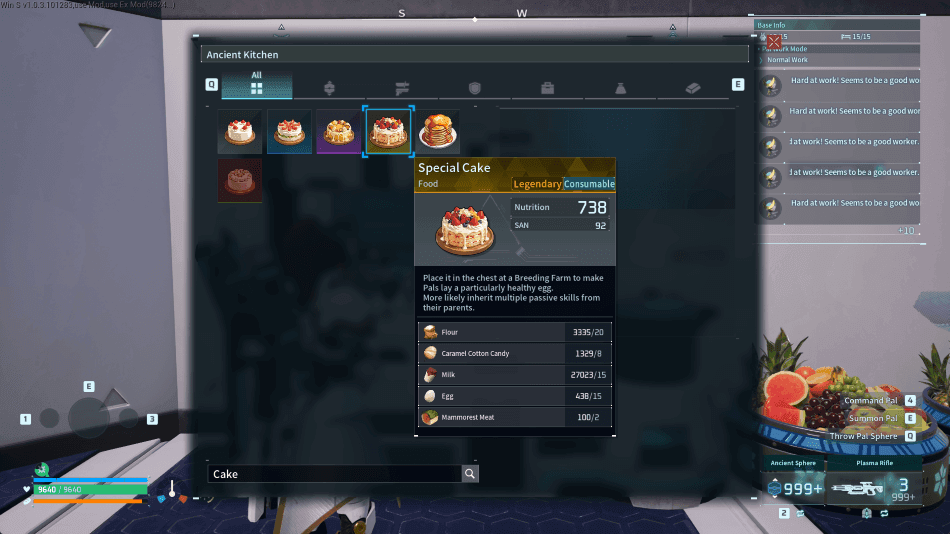

Version 1.0 added four new Cakes alongside the original Cake, giving you different ways to influence what you get from a breeding cycle.
1) Mushroom Cake
Mushroom Cake makes the offspring’s Talents grow more easily, making it useful when your main goal is producing Pals with stronger individual stat potential.
2) Vegetable Cake
Vegetable Cake makes the breeding pair produce two Eggs at once, giving you twice as many offspring to check from each breeding cycle.
3) Extravagant Vegetable Cake
Extravagant Vegetable Cake makes Talents grow more easily while increasing the chance of a Mutation, making it the Cake to use when deliberately hunting mutated Pals.
4) Special Cake
Special Cake increases the chance of offspring inheriting multiple Passive Skills from their parents, making it particularly useful when you have already prepared parents with desirable traits.
Mutation
Mutation is the biggest new addition to the breeding system, giving normal breeding attempts a chance to produce something much rarer than the expected offspring.
Each Egg has a 1% chance of becoming a Mutated Egg, while using Extravagant Vegetable Cake increases that chance to 3%, so Mutation is something you need to actively hunt through repeated breeding.
A Mutated Egg does not simply hatch into a slightly improved version of the Pal your parents would normally produce.
Instead, it can hatch into a much rarer Pal than the expected breeding result, making Mutation capable of producing Pals that you would not normally obtain from that parent combination.
What Mutated Pals Get?
Mutation is especially valuable because the resulting Pal comes with several unusual characteristics that ordinary breeding results cannot provide.
A Pal hatched from a Mutated Egg always has four Passive Skills, including at least two Tier-4 skills and one Mutation-exclusive Passive Skill.
Mutated Pals also have very high Talent potential, are always Alpha, and begin at Condensation Level 2, giving them a powerful starting point.
There are five Mutation-exclusive Passive Skills: Babysitter, Heavily Armored, Idiosyncratic, Immortality, and Skymarcher.
Because Mutation is chance-based, there is no parent combination that guarantees a particular result, making repeated breeding attempts essential.
Passive Skill Inheritance
Passive Skills remain one of the most important reasons to breed, especially when you are trying to build a Pal around a specific combat or work setup.
The offspring can inherit Passive Skills from its parents, allowing you to gradually combine useful traits through several generations instead of having to find a naturally perfect Pal.
Special Cake gives you more control over this process by increasing the chance that multiple Passive Skills from the parents will be inherited by the offspring.
The Cake does not create specific Passive Skills for you, though, so the parents still need to carry the traits you actually want before you begin breeding.
Active Skill Inheritance
Active Skills received an important change in 1.0 that gives you more control over which attacks can potentially be passed down.
The offspring’s inherited Active Skills are selected from the three Active Skill slots equipped on the parent Pals, meaning the moves your parents have equipped before breeding now matter.
If you want a particular attack to have a chance of being inherited, you should equip that attack on one of the parents before starting the breeding process.
It is still not a guarantee that the offspring will receive the move, but preparing the parents lets you control the pool of Active Skills that can enter the inheritance process.
Talents
Talents are another part of an offspring’s overall quality, determining its potential stats and giving you another factor to consider when choosing which Pals to keep.
Two Pals can have the same species and identical Passive Skills while still having different Talent values, meaning one offspring can ultimately have better stat potential than another.
Mushroom Cake improves Talent growth, while Extravagant Vegetable Cake combines that effect with its increased chance of producing a Mutation, making both useful for stronger breeding results.
The Ancient Hatchery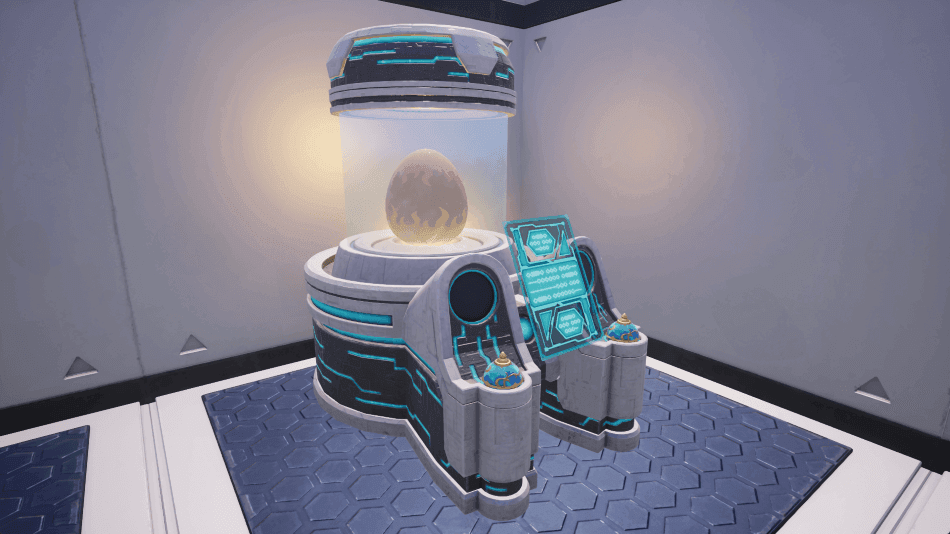
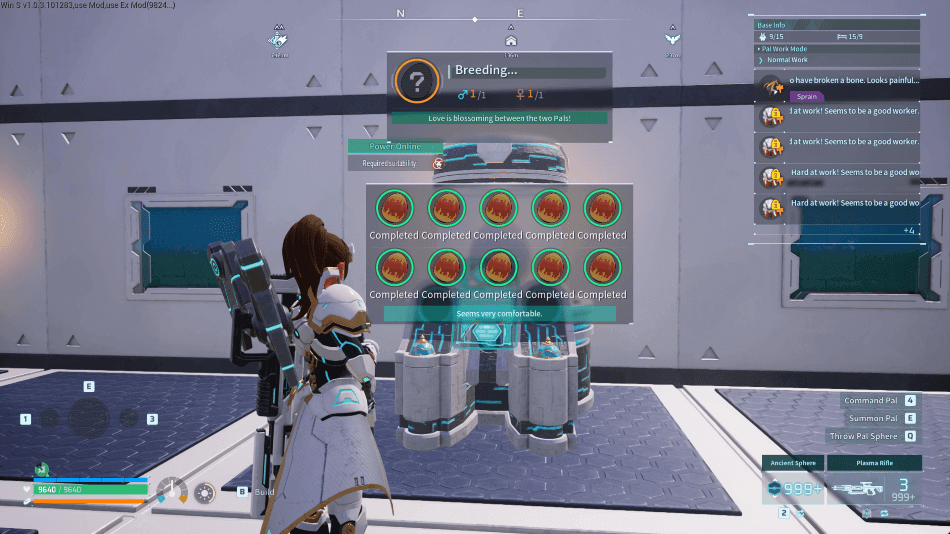
The Ancient Hatchery is the major new breeding structure added for the endgame, combining the breeding and incubation processes into one facility.
Instead of assigning parents to a Breeding Farm and then manually moving their Eggs into separate Incubators, the Ancient Hatchery handles both stages in the same structure.
It can hold up to ten Eggs at once, making it particularly useful for players running large breeding projects where repeatedly collecting, moving, and incubating Eggs becomes tedious.
The Ancient Hatchery unlocks at Technology Level 76 and requires 8 Ancient Technology Points before you can research the structure.
Building the Ancient Hatchery requires 100 Paloxite Ingots, 50 AI Cores, 30 Ancient Civilization Parts, and 20 Ancient Civilization Cores, making it a late-game investment.
The structure also requires electricity and has a substantial power demand, so you will need enough generation capacity available before adding it to an active breeding setup.
What the Ancient Hatchery Actually Changes?
The biggest advantage of the Ancient Hatchery is that it removes much of the manual work normally required to turn a breeding pair into a finished, hatched Pal.
Your breeding pair stays inside the structure while Eggs are produced and incubated, removing the need to constantly transfer newly produced Eggs between separate facilities.
It also takes less overall space than maintaining large numbers of Breeding Farms and Incubators, which becomes increasingly valuable when you are running repeated breeding cycles.
The Ancient Hatchery also improves the inheritance rate of rare skills, giving it another advantage for players trying to produce Pals with particularly valuable inherited abilities.
However, the Ancient Hatchery does not increase Mutation chances by itself, so Extravagant Vegetable Cake remains important for Mutation hunting.
Breeding and Incubation Times
Version 1.0 also changed Egg incubation times for newly created worlds, reducing the amount of time required to hatch Eggs on Normal and Hard difficulty.
Egg incubation time was reduced by half in these newly created worlds, making breeding projects considerably faster for players starting a fresh save after the full release.
This adjustment is separate from the Ancient Hatchery, so the structure itself is not responsible for the general incubation-time reduction introduced with Version 1.0.
Players returning to an existing world should keep this distinction in mind, since their incubation times may differ from those found in newly created Normal or Hard worlds.
How to Breed for Better Pals?
Start by checking the current Version 1.0 breeding combination for the species you want, especially if you are returning with an older Early Access breeding chart.
Prepare your parent Pals with the Passive Skills you want to inherit, then equip useful Active Skills so those moves can enter the inheritance pool.
Choose your Cake according to the result you are targeting, whether you want more Eggs, better Talents, additional Passive Skills, or increased Mutation chances.
Once the offspring arrive, compare their species, Passive Skills, Active Skills, and Talents instead of keeping every Pal that simply matches your target species.
Breeding for Mutation
Mutation breeding is less about finding a specific parent combination and more about producing enough attempts to eventually hit the Mutation chance.
Using Extravagant Vegetable Cake increases the Mutation chance from 1% to 3%, giving each breeding attempt a much better opportunity to produce a Mutated Egg.
The Ancient Hatchery is especially useful for Mutation hunting because it combines breeding and incubation, reducing the amount of manual Egg management between attempts.
Even when Mutation is your main goal, strong parent Pals are still worth preparing because the rest of your breeding setup continues to affect the resulting offspring.
What Returning Players Should Do Differently?
If you have not played since Early Access, the first thing to check is whether your old breeding combinations still produce the same offspring after the Version 1.0 changes.
After updating your combinations, treat each breeding project as its own goal, whether you are chasing a species, Passive Skills, Active Skills, Talents, or a Mutation.
The new Cakes let you focus each breeding cycle toward a specific goal, while the Ancient Hatchery makes repeated breeding much easier once you reach the endgame.
Most importantly, do not rely entirely on older breeding guides, since Version 1.0 reviewed and adjusted breeding combinations throughout the game.
Verdict
Palworld 1.0 keeps the core breeding system intact, but the changes add much more depth for players who want to produce highly optimized Pals.
The revised breeding combinations are the biggest adjustment for returning players, while Mutations, specialized Cakes, Active Skill inheritance, and Talents add more ways to improve offspring.
Once you reach the endgame, the Ancient Hatchery brings the process together by handling breeding and incubation in one facility, making large breeding projects much easier to manage.
