The Season 13 Lord of Hatred expansion overhauls Diablo 4 skill trees, shifting progression away from passive stacking toward active skill customization.
Builds now focus more on ability behavior, branching upgrades, and meaningful combat decisions rather than small incremental passive stat bonuses.
This change makes skill investment feel more impactful, encouraging players to specialize in core abilities that define their overall combat identity.
Skill Tree Changes Overview
The skill tree now contains fewer passive nodes, with most generic bonuses removed or relocated into gear, Paragon Boards, and external systems.
Key build-defining passives still exist, but they are more limited and focused on synergy rather than broad statistical enhancements.
Overall structure is cleaner, emphasizing active abilities and their upgrades instead of layered passive optimization across multiple progression paths.
Skill Level Scaling to Rank 15
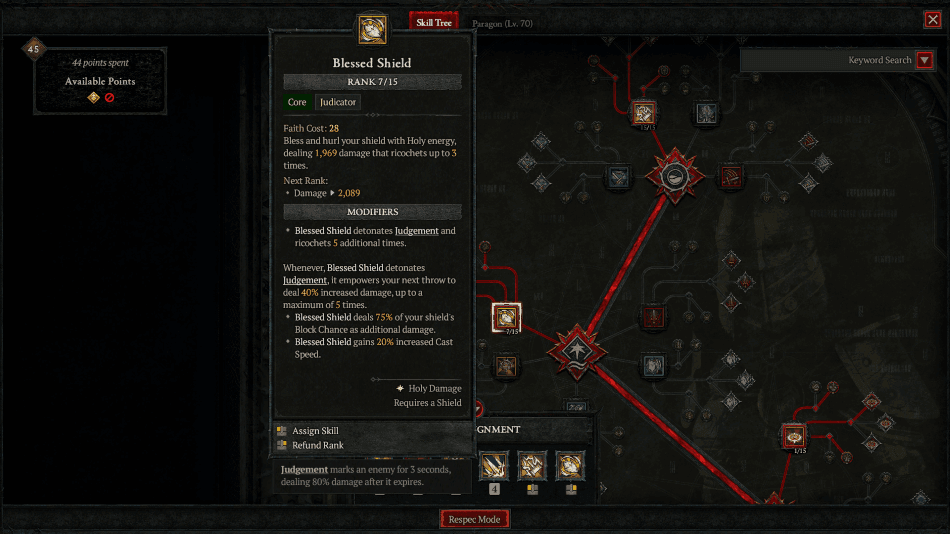
All active skills can now be upgraded up to rank fifteen, significantly increasing their scaling potential and long-term effectiveness in combat.
Each rank improves damage, utility, or mechanical behavior, ensuring skills remain relevant throughout leveling and high-end endgame progression content.
This system rewards specialization by making fully invested abilities significantly stronger and more defining for overall build performance.
Branching Skill Paths
Every skill now features multiple branching upgrade paths that change functionality instead of providing simple percentage-based stat increases.
Players can choose between damage-focused, utility-based, or control-oriented modifications depending on how they want abilities to function.
This system creates deeper customization, allowing the same skill to feel completely different depending on selected upgrade direction.
Build Impact and System Changes
The rework shifts Diablo 4 toward more active gameplay, where skill usage matters more than passive stat stacking or optimization.
Gear and Paragon systems now handle most long-term scaling, while skill trees focus on how abilities behave in combat moment to moment.
This creates more distinct builds across players, with greater emphasis on skill combinations, timing, and ability interactions instead of passive bonuses.
Eternal Realm Character Changes and Skill Tree Reset
Existing Eternal Realm characters now enter Season 13 expansion content at level sixty with immediate access to the new campaign.
These characters can continue leveling up to level seventy, gaining additional skill points to strengthen and refine their builds further.
Upon entering the expansion, all skill trees are fully reset to match the reworked system structure and updated skill progression changes.
Players must respec manually since previous setups no longer function correctly under the updated skill tree layout and new upgrade paths.
Verdict
The Season 13 skill tree rework makes Diablo 4 more focused on active skill decisions, reducing reliance on passive bonuses significantly overall.
Rank fifteen scaling and branching upgrades ensure skills evolve into powerful, specialized tools rather than simple damage increases alone.
Overall, the system improves build identity and combat depth by prioritizing meaningful skill choices and reducing passive-heavy progression design.
