Growing your own crops becomes an important source of food as you progress through Valheim, but planting most seeds requires more than simply finding open ground.
The Cultivator provides the tools needed to prepare farmland and plant crops, giving you a renewable supply of ingredients instead of relying entirely on gathered food.
Getting one requires reaching the Bronze Age, after which you can begin establishing farms and expanding them as additional crops become available in later biomes.
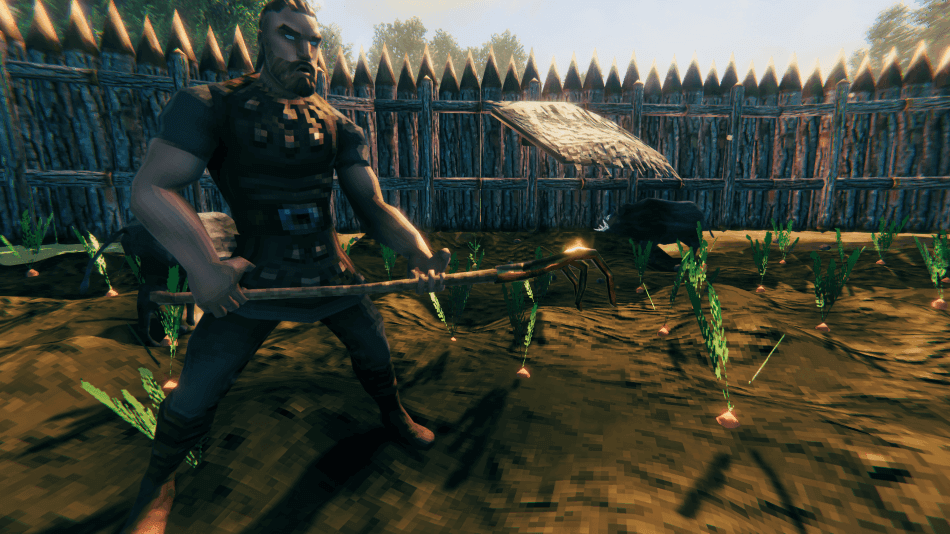
How to Get the Cultivator?
The Cultivator is crafted at a Forge using 5 Bronze and 5 Core Wood, requiring you to reach the Black Forest and begin processing metals first.
Bronze is created by combining Copper and Tin at a Forge, while Core Wood can be obtained by cutting Pine Trees throughout the Black Forest.
Once you have both materials, craft the Cultivator at your Forge and equip it whenever you need to prepare farmland or plant available crops.
How to Use the Cultivator?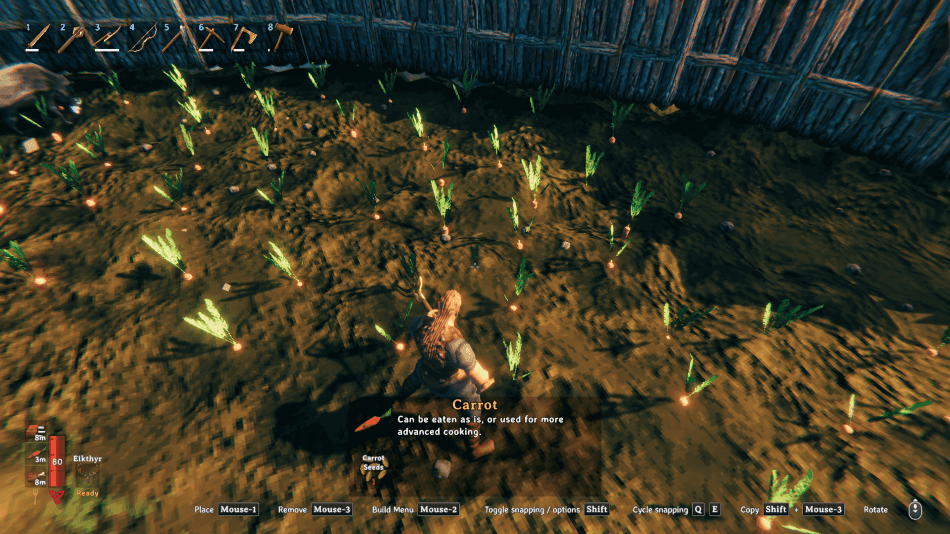

Equip the Cultivator and use its build menu to access several farming options, including cultivating suitable ground and planting seeds or crops you currently possess.
Before planting most crops, select Cultivate and use it on an area of ordinary ground to transform the surface into soil suitable for farming.
You can then reopen the Cultivator menu, select the crop you want to grow, and place it on the prepared soil wherever the required conditions are met.
How to Plant Crops?
Each planted crop needs enough open space around it to grow properly, so avoid placing your plants directly beside one another when preparing larger fields.
Plants that are too close together will display a warning and fail to develop normally, making consistent spacing important when trying to maximize your harvest.
You should also protect farmland from nearby enemies and animals, as creatures entering an unsecured field can damage crops and ruin part of your harvest.
Do Crops Grow in Every Biome?
Not every crop can grow in every biome, meaning seeds collected later in your progression may require farmland within the region where they normally thrive.
Early crops such as Carrots, Turnips, and Onions can be grown across several suitable biomes, while later crops have more restrictive growing requirements.
Always check the status of newly planted crops after placing them, as unsuitable conditions will prevent them from developing into something you can eventually harvest.
How to Get More Seeds?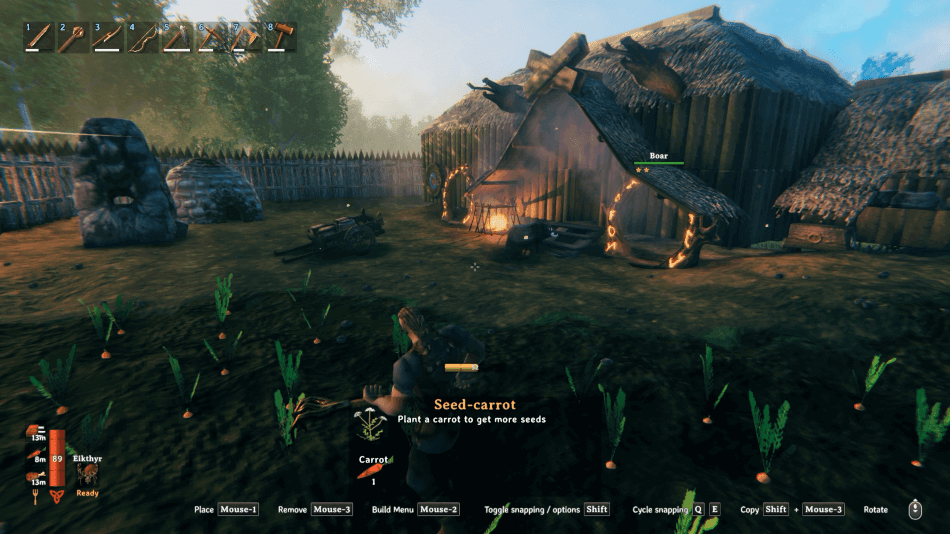
Many crops can be replanted specifically to produce additional seeds, allowing a small initial supply to eventually support a much larger and sustainable farm.
For example, planting a Carrot Seed produces a Carrot, while planting the harvested Carrot as a seed crop eventually provides several new Carrot Seeds.
Repeating this cycle lets you expand your available planting stock over time instead of having to continuously search the wilderness for additional wild seed plants.
What Else Can the Cultivator Do?
The Cultivator can also plant several types of trees when you have the appropriate seeds or cones, allowing you to establish renewable wood sources near your base.
Its menu includes options for restoring cultivated soil back into ordinary terrain, which can be useful when redesigning farms or cleaning up previously prepared areas.
Using these different Cultivator functions also ties into the Farming skill, making regular farm maintenance contribute toward improving your overall farming efficiency.
How to Repair the Cultivator?
Using the Cultivator consumes durability whenever you prepare terrain or plant something, eventually preventing further use once the tool becomes completely worn down.
You can repair the Cultivator for free at a Forge, provided the crafting station is accessible and meets the requirements needed to service the tool.
No additional Bronze or Core Wood is consumed when repairing it, so durability mainly determines how much farming you can complete between visits to your Forge.
Can You Upgrade the Cultivator?
The Cultivator can be upgraded at a Forge, increasing its durability and allowing you to perform more farming actions before the tool eventually needs another repair.
Each quality upgrade requires additional Bronze along with a sufficiently upgraded Forge, giving the Cultivator a maximum quality of level 4.
Upgrading is most useful when maintaining larger farms, where the additional durability reduces how frequently you need to stop planting and return for repairs.
Verdict
The Cultivator turns farming into a reliable source of ingredients, making it an important Bronze Age tool once you begin unlocking recipes that depend on cultivated crops.
Preparing the soil is only the beginning, as proper spacing, biome requirements, and seed production all determine how successfully your farm develops over time.
Once your first crops are established, continually replanting part of each harvest can provide enough seeds to expand the farm without repeatedly searching for replacements.
